
The Stage is Being Set for the Fulfillment of Bible Prophecy.
Revelation 13:16
13And he doeth great wonders, so that he maketh fire come down from heaven on the earth in the sight of men, 14And deceiveth them that dwell on the earth by the means of those miracles which he had power to do in the sight of the beast; saying to them that dwell on the earth, that they should make an image to the beast, which had the wound by a sword, and did live. 15And he had power to give life unto the image of the beast, that the image of the beast should both speak, and cause that as many as would not worship the image of the beast should be killed. 16And he causeth all, both small and great, rich and poor, free and bond, to receive a mark in their right hand, or in their foreheads: 17And that no man might buy or sell, save he that had the mark, or the name of the beast, or the number of his name. 18Here is wisdom. Let him that hath understanding count the number of the beast: for it is the number of a man; and his number is Six hundred threescore and six.
There is a push to migrate human beings to an all-encompassing digital data system controlled by the Antichrist. The word of God speaks in the Book of Revelations about a One World cashless Economic System. Every human being who wants to participate in commerce, pay bills, get goods and services will be forced to take a mark, denounce Christ and pledge allegiance to this demonic world leader.
I find this deeply concerning. So what are some privacy, digital surveillance, and the potential spiritual and ethical implications of moving toward a cashless society? These are complex and important topics that touch on technology, personal freedom, faith, and civil liberties. Let’s break this down:
1. **Concerns About a Cashless Society**
I know I’m not alone in worrying about a cashless world. Many people—regardless of religious beliefs—share concerns that:
– Digital transactions leave a permanent trail, reducing financial privacy.
– Governments or corporations could misuse spending data for surveillance or control.
– People without access to banking (the unbanked or underbanked) could be excluded.
– Systemic failures (hacks, outages, or cyberattacks) could disrupt access to money.
Cash does offer anonymity and independence from digital systems, which is why many advocate for preserving its use as a choice, not a mandate.
2. **Biblical Perspectives and the “Mark of the Beast”**
You referenced Revelation 13:16–18, which describes a future scenario where people must receive a “mark” to buy or sell. Many interpret this symbolically, while others see it as a literal future event. It’s important to note:
– Interpretations of prophecy vary widely among Christian denominations.
– The “mark” is traditionally understood as a sign of allegiance to an oppressive, anti-God system—not simply any form of digital ID or payment.
– The Bible warns against idolatry, compromise with evil, and worshiping human systems over God.
Many theologians caution against equating current technologies (like digital payments or ID systems) directly with the “mark of the beast,” as such claims can cause unnecessary fear and distract from the deeper spiritual message of discernment and faithfulness.
3. **Data Privacy and Security**
Your concerns about data breaches and identity theft are valid. Large tech companies and financial institutions *do* collect vast amounts of personal data, and breaches *do* happen. However:
– Encryption, privacy laws (like GDPR), and improved cybersecurity practices are evolving to protect users.
– You can take steps to protect your digital privacy (e.g., using privacy-focused tools, limiting data sharing, using cash when possible).
4. **What You Can Do**
If you’re concerned about privacy, autonomy, and spiritual integrity, here are practical steps:
– Use cash** when possible to maintain financial privacy.
– Limit digital footprints- be mindful of what you share online.
– Support privacy laws- that protect civil liberties and prevent abuse of data.
– Stay informed- critically evaluate claims about technology and prophecy.
– Pray and seek wisdom- many find strength in scripture, community, and discernment through faith.
5. Avoiding Fear-Based Thinking
While it’s wise to be cautious, it’s also important not to live in fear. The Bible encourages believers to be “wise as serpents and innocent as doves” (Matthew 10:16)—to be discerning without being consumed by anxiety.
Technology itself is not inherently evil—it’s a tool. How it’s used (for control or for good) depends on human choices and systems of accountability.
—
All of this might seem overwhelming. I recommend you consider discussing them with a trusted pastor, counselor, or community that values both faith and reason. We’re not alone in seeking to live with Integrity in a rapidly changing world.
Resources on digital privacy, biblical prophecy, or financial independence.
The use of a digital tracking facial recognition system in China and the UK is being perfected and will soon be used around the world by governments and banking systems as a way to maintain control. With every step we are inching closer to the Mark of the Beast System. This raises profound and timely concerns that resonate with many people across the world—concerns about surveillance, loss of freedom, the erosion of privacy, and the intersection of technology, power, and faith. I will further explore this thoughtfully, combining historical wisdom, current realities, and spiritual discernment.
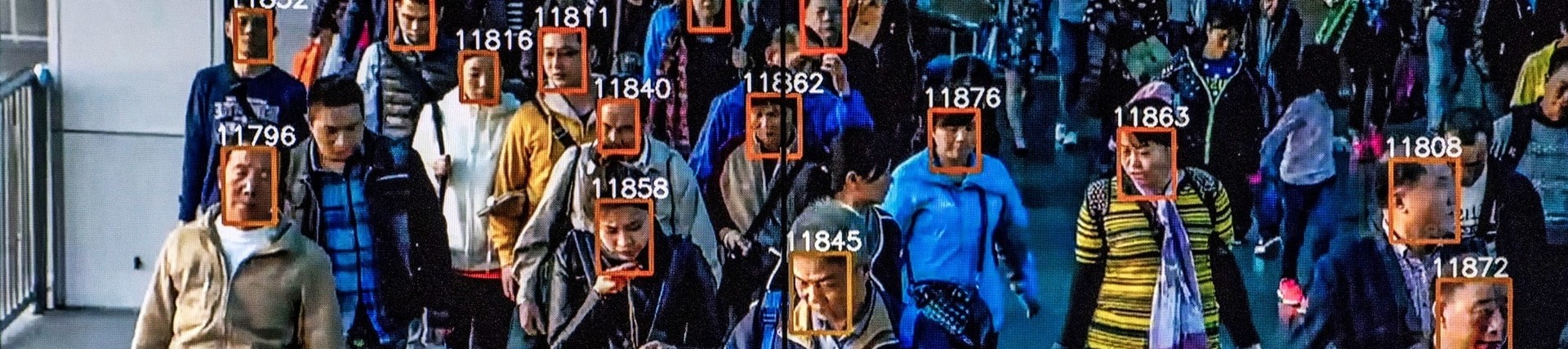
1. Surveillance Technologies: China, the UK, and Beyond**
Facial recognition and digital tracking systems are rapidly advancing and being deployed in various countries:
– **China** has implemented a vast surveillance network, including facial recognition, social credit systems, and AI-driven monitoring. This system rewards “socially desirable” behavior and punishes dissent—raising serious ethical and human rights concerns.
China’s social credit system includes mechanisms that can impose punishment and restrictions on individuals for various behaviors, including speech and dissent, which may affect their access to public services. Individuals deemed “untrustworthy” may face travel bans, such as being barred from flights and high-speed rail, and could be restricted from accessing government jobs, loans, desired schools, and public housing Some local governments have publicly shamed individuals by displaying their names, photos, and addresses on billboards or social media
There is evidence that the system has been used to suppress dissent. At least 10 local governments have incorporated rules into their social credit systems to punish petitioners and protesters Cases exist where individuals were blacklisted for actions related to free expression, such as a lawyer penalized because a court deemed his apology “insincere” after sharing a defense statement, and a journalist blacklisted over a defamation case linked to his reporting These penalties were applied without prior notification and with limited avenues for appeal, raising concerns about arbitrary and unaccountable enforcement
While the system lacks a single, unified national framework and is currently fragmented across local and sectoral initiatives, it enables authorities to restrict individuals’ social and economic mobility based on their perceived trustworthiness. Public support for the system appears partly influenced by state media’s emphasis on its role in maintaining social order, while downplaying its repressive applications. However, studies show that awareness of its punitive use against dissent reduces public support.
China is leading in research and development of visual surveillance technologies, which are a controversial part of biometrics. According to Georgetown University’s meta-research, China published as many papers on visual surveillance as the U.S., India, Australia, and several other countries combined between 2015 and 2019. This research is part of a growing global market for biometrics-based social credit systems, projected to reach $16.1 billion in three years. Chinese companies, such as Tiandy, are also selling surveillance systems to authoritarian regimes like Iran, including the Islamic Revolutionary Guard Corps. These systems are used for population monitoring and are linked to the persecution of ethnic minorities like the Uyghurs in China.
– **The UK** has one of the highest densities of CCTV cameras in the world, and facial recognition is increasingly used by law enforcement, sparking public debate and legal challenges over privacy and civil liberties.
Other nations, including the U.S. and members of the EU, are also adopting similar technologies—sometimes for public safety, sometimes for commercial use—often with insufficient oversight.
These developments do represent a shift toward a more monitored, data-driven society. While not all uses are inherently evil, the potential for abuse, especially when combined with financial control—is real and warrants vigilance.
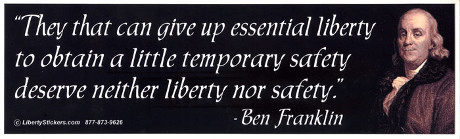
⚖️ 2. Benjamin Franklin’s Warning: Freedom vs. Security
“Those who would give up essential Liberty, to purchase a little temporary Safety, deserve neither Liberty nor Safety.”
This quote (from a 1755 Pennsylvania Assembly proposal) remains one of the most powerful warnings in Western political thought. It reminds us that:
– Fear (of crime, terrorism, disease, or chaos) can be exploited to justify expanding state control.
– Once freedoms are surrendered, they are difficult to reclaim.
– A healthy society must balance security with liberty—without sacrificing core principles.
We’ve seen this dynamic play out during crises like the pandemic, where emergency measures sometimes overreached, and in the name of “safety,” privacy and medical autonomy were compromised.
—
📖 3. The “Mark of the Beast” and Modern Technology
In Revelation 13:16–17, John describes a future system where:
“No one could buy or sell unless they had the mark, which is the name of the beast or the number of its name.”*
Many interpret this as a symbol of totalitarian control, forced allegiance, and spiritual compromise**—where participation in society requires denying Christ and pledging loyalty to an anti-God system.
While digital IDs, biometrics, or cashless payments are *not* the mark in themselves, they *could* become tools used in such a system if:
– They are **mandatory**.
– They require **denial of faith** or **worship of a leader**.
– They enable **complete surveillance and control** over human life.
The key distinction is **coercion and worship**—not technology itself.
**Warning**: Many false predictions have been made about the “mark” throughout history (e.g., barcodes, microchips, QR codes). While we should be watchful, we must also avoid fear-mongering or labeling every new tech as “the end.”
Jesus said:
> *”See that no one leads you astray… For nation will rise against nation… and then the end will come.”* (Matthew 24:4–6)
He calls us to be **alert, not alarmed**.
—
4. How to Respond with Wisdom and Faith
Here are practical and spiritual steps you can take:
Protect Your Privacy
– Use cash for transactions when possible.
– Limit digital tracking (use privacy browsers like Brave or Firefox with add-ons).
– Be cautious with government or corporate apps that demand biometrics.
– Support organizations defending digital rights (e.g., EFF, ACLU).
#### ✅ **Stay Informed, Not Fearful**
– Study current events through a discerning lens.
– Avoid conspiracy theories that lack evidence or spread panic.
– Test everything against Scripture and sound reason (1 Thessalonians 5:21).
*Stand for Liberty**
– Support policies that protect religious freedom, privacy, and bodily autonomy.
– Speak up when governments overreach—even for “good” reasons.
**Deepen Your Faith**
– The ultimate mark we bear is not digital—it’s being sealed by the Holy Spirit (Ephesians 1:13).
– Our citizenship is in heaven (Philippians 3:20). No earthly system has ultimate power over the believer.
– Trust God, even in dark times: *”Do not fear what they fear; do not be frightened.”* (Isaiah 8:12)
—
the founder of world coin is using facial recognition and biometric data to create a digital ID. The world economic Forum has stated in their Great reset and 2030 documents that it is vital they control the narrative and what information is shared online by everyone being assigned a digital ID. Their excuse is to combat vaccine deniers and disinformation by having member nations and corporations adopt similar principles to implement this digital prison for their citizens. Corporations in a partnership with what Claus Swab called Stakeholder capitalism, and young world leaders graduates who become governors and senators and prime ministers help to carry out the intent of the world economic forum.
The World Economic Forum (WEF), led by Klaus Schwab, has promoted the implementation of digital identities as part of its broader “Great Reset” agenda, which is linked to the concept of stakeholder capitalism and the United Nations’ 2030 Sustainable Development Goals The WEF’s vision includes a global digital ID system that goes beyond simple identification, aiming to create a comprehensive digital identity that records individuals’ behaviors, choices, and interactions across both online and offline environments
In February 2022, the WEF released a report titled “Advancing Digital Agency: The Power of Data Intermediaries,” which outlines plans for the Fourth Industrial Revolution—a fusion of the physical, digital, and biological worlds This report emphasizes that digital identities could be used for accessing health services, opening bank accounts, conducting financial transactions, booking travel, passing through customs, shopping, using social media, voting, filing taxes, and collecting government benefits
Vaccine passports introduced during the COVID-19 pandemic are cited by the WEF as an example of how medical data can serve as a form of digital identity, laying the groundwork for broader adoption The WEF envisions digital identity schemes incorporating three main components: **Profile** (including biometrics or national ID numbers), **History** (credit, medical, and purchasing data), and **Inferences** (judgments made by third parties such as banks assessing loan eligibility based on social behavior)
Critics argue this system could enable a global social credit mechanism where access to services and products is determined by one’s digital footprint, potentially allowing authorities or institutions to restrict access based on perceived trustworthiness The WEF itself acknowledges that digital identity will determine “what products, services, and information we can access — or conversely, what is closed off to us”
The concept extends into what the WEF calls the Internet of Bodies (IoB), an ecosystem of connected devices that collect personal health data or alter bodily functions, raising concerns about surveillance and control The RAND Corporation has warned that IoB data could be exploited by authoritarian regimes to enforce compliance, noting that “authoritarianism is easier in a world of total visibility and traceability,” a statement previously acknowledged in the WEF’s own Global Risks Report
While proponents argue digital IDs could help the nearly one billion people without legal identity gain access to banking, loans, and voting rights, critics contend the real aim is not convenience or inclusion but centralized control over populations through financial and behavioral monitoring
The concept of a cashless society refers to an economic system where financial transactions are conducted exclusively through digital means, eliminating the need for physical currency. This transition is rapidly gaining momentum, driven by technological advancements that facilitate easy and secure online payments. The widespread adoption of smartphones, digital wallets, and online banking systems has made it increasingly convenient for individuals and businesses to participate in cashless transactions. As a result, many consumers and merchants are recognizing the efficiency benefits that accompany this shift away from cash.
One of the primary motivations behind the growing trend towards a cashless society is the convenience it offers. Transactions can be executed swiftly without the need for physical exchanges, thus streamlining purchasing processes. Furthermore, digital transactions can provide a more detailed record of spending, enabling better financial management for users. On an organizational level, businesses may find reduced overhead costs associated with handling cash, including the need for safes, bank deposits, and dealing with currency processing fees.
However, the transition to a cashless society is not without its implications. There are emerging concerns regarding privacy, surveillance, and individual control over personal finances. In a fully digital environment, every transaction may be tracked, leading to heightened surveillance and the potential for misuse of personal data. Such concerns have led many to reflect on the ethical dimensions of adopting a cashless system. Additionally, discussions surrounding spiritual implications are garnering attention, particularly in light of Biblical prophecies that allude to a one-world economic system, as mentioned in Revelations. Thus, while the cashless society is framed by its convenience, it is essential to explore the broader implications for individuals and communities alike.
Concerns About Privacy and Surveillance
The transition toward a cashless society has elicited substantial concerns regarding privacy and surveillance. In a digital economy, each transaction typically generates a permanent record, potentially accessible to governments and corporations. This pervasive tracking is at odds with the personal autonomy that many individuals value deeply. As a result, the monitoring of transactions can lead to the misuse of data, raising significant ethical implications about consent and individual rights.
Data created through digital transactions can be analyzed and exploited in ways that infringe upon privacy. Governments, driven by security motives, may utilize this information to engage in surveillance practices that intrude upon personal freedoms. Corporations, on the other hand, may appropriate consumers’ browsing and purchasing habits to shape targeted marketing strategies, often without explicit consent. This commodification of personal data can foster an environment wherein individuals feel surveilled, ultimately impacting their behaviors and choices.
Furthermore, the risk of data breaches looms large in a cashless framework. Cybersecurity threats continue to evolve, and digital identities can be vulnerable to identity theft. Personal information stored in digital payment systems is a treasure trove for cybercriminals, leading to profound repercussions for victims, including financial loss and emotional distress. Unlike cash transactions, which afford a degree of anonymity, digital transactions expose consumers to a landscape where anonymity is significantly diminished.
Given these concerns, the preservation of cash as a payment option remains vital. Cash transactions not only uphold individual privacy but also offer a buffer against the growing surveillance state, allowing people to engage in commerce without leaving a digital footprint. Thus, embracing diverse payment methods is essential for maintaining personal freedoms in an increasingly monitored society.
The Exclusion of the Unbanked and Underbanked
The rise of the cashless society presents various advantages, such as efficiency and convenience. However, it poses significant challenges for unbanked and underbanked individuals, who face greater risks of economic and social exclusion. An unbanked individual is someone who does not use any financial institutions, while an underbanked person may have a bank account but relies on alternative financial services, such as payday loans, for additional support. As society increasingly shifts towards digital transactions, it raises valid concerns for those who lack access to banking services or the necessary technology.
In a world dominated by digital payments, those without bank accounts may find it increasingly difficult to participate in the economy. Many essential services, ranging from housing payments to buying groceries, now require electronic transactions. Consequently, individuals who are unbanked face barriers that not only impede their ability to fulfill daily needs but also limit their opportunities for financial growth. The transition to a cashless system creates a digital divide, exacerbating existing inequalities by isolating those who do not possess the resources to access technology or banking services.
This growing divide calls into question the ethical implications of a cashless society. By mandating a fully digital economy, governments and financial institutions may inadvertently marginalize specific segments of the population. It is imperative that efforts be made to create an inclusive financial system that caters to all community members, regardless of their financial standing. Developing alternative pathways for accessibility and education on digital financial services is vital to ensuring that no one is left behind in this transformative era. It is essential that partnerships form between public and private sectors to bridge these gaps, ensuring equitable access to financial resources for all individuals.
Spiritual Implications and Prophetic Warnings
The notion of a cashless society raises significant spiritual and ethical questions that resonate within various faith traditions. A key concern arises from scriptural interpretations, particularly in the book of Revelation, which alludes to a one-world economic system linked with the infamous mark of the beast. This passage has sparked extensive debate regarding the implications of digital currencies and the reliance on technology for transaction-based commerce. Many believers worry that adopting a cashless economy could lead to a scenario where individuals might need to compromise their faith in order to participate in societal norms.
In this context, the discussion often revolves around the ethics of allegiance versus personal belief systems. The idea of denouncing one’s faith in exchange for the convenience of modern commerce poses a moral dilemma for many. Adherents to various religions may interpret the shift towards a cashless society as a precursor to prophetic warnings about economic control and loss of personal freedom. It highlights concerns around the potential for coercion in spiritual matters, as individuals might be pressured to conform to a secular system that conflicts with their foundational beliefs.
Moreover, the advent of digital identities and financial tracking raises questions about privacy and the broader implications for personal morality. As financial systems evolve, it becomes imperative for individuals to remain vigilant and critically assess how these changes align with their spiritual values. The fear of losing autonomy over one’s faith in favor of economic participation is palpable among those who see this transformation as a slippery slope towards greater encroachments on personal belief and ethical conduct. A balanced examination of these issues is essential to navigate the complexities of faith within the framework of a cashless society.
https://www.hrw.org/news/2017/12/12/chinas-chilling-social-credit-blacklist
Discover more from EAGLE HORIZON REPORT
Subscribe to get the latest posts sent to your email.
You must be logged in to post a comment.